

Take the “A” Train to Complete Boxes From Ellington, Armstrong, Christian and Smith
Okay – or should that be OKeh? – in fairness, so are the thirties, forties, and fifties, thanks to four upcoming box sets spotlighting legendary jazz and blues stars. Legacy Recordings adds to its growing Complete Albums Collection library on October 30 with these new volumes:
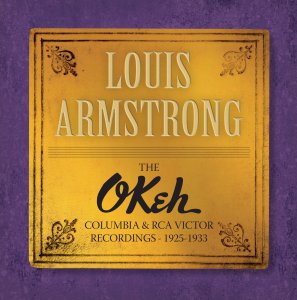
- Louis Armstrong, The Complete OKeh, Columbia and RCA Victor Recordings 1925-1933 (OKeh/Columbia/RCA/Legacy) (10 CDs);
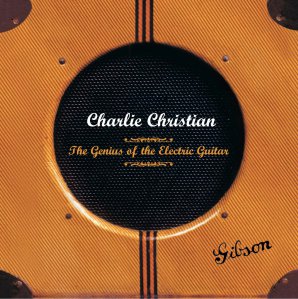
- Charlie Christian, The Genius of the Electric Guitar (Columbia/ Legacy) (4 CDs);
- Duke Ellington, The Complete Columbia Studio Albums Collection 1951-1958 (Columbia/ Legacy) (9 CDs); and
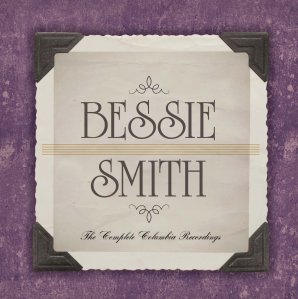
- Bessie Smith, The Complete Columbia Recordings (Columbia/ Legacy) (10 CDs).
These titles follow up the recent releases from The Brecker Brothers, Etta James and Sarah Vaughan (all due in stores Tuesday) and like those titles and the other Complete Albums sets, these include original albums or compilations packaged in replica mini-LP sleeves. In most cases, bonus tracks that have been appended to past Legacy reissues have been retained, and booklets have been prepared with new liner notes and full discographical information for each artist and title contained. Virtually all of the CDs in the Complete Album Collection jazz series have been newly remastered by multiple Grammy-winning engineer Mark Wilder.
The beloved Louis Armstrong was last year the subject of a massive 10-CD box set spotlighting his entire career, a set which drew considerable attention when Elvis Costello proclaimed it a superior purchase to a similarly-priced set of his own material. Well, Mr. Costello would likely approve of The Complete OKeh, Columbia and RCA Victor Recordings 1925-1933, with its ten CDs of some of the earliest recordings by the man alternately known as Satchmo or Pops. This period yielded the famous Hot Fives and Hot Sevens recordings, among the most historically important and, indeed, entertaining, of Armstrong’s long career during which he influenced virtually every musician who’s ever picked up a horn. Any understanding of popular music begins with these famous sessions, featured on the first three discs of this new set. (A 2000 Legacy box set was previously dedicated to these recordings.)
CDs 1-7 of the new box replicate the contents of the first seven volumes of the now out-of-print Armstrong Columbia Jazz Masterpieces series, released 1988 to 1993; the first three discs are dedicated to the Hot Fives and Hot Sevens as recorded between 1925 and 1928. CD 4 spotlights Pops’ recordings alongside pianist Earl “Fatha” Hines with a variety of groups in 1927-1928, while CDs 5 and 6 cover the seminal 1929-1930 period during which time Armstrong recorded in New York and Los Angeles. CDs 7 and 8 find Louis embracing the 1930s with open arms with sessions in Chicago, while the final two discs in the box pick up with his move to Victor in late 1932 with recordings made from Camden to Chicago! The ten-CD set ends with Louis (and wife Lil on piano!) backing country –and-western pioneer Jimmie Rodgers on his “Blue Yodel No. 9,” recorded in Los Angeles in July 1930.
Legacy notes that The Complete OKeh, Columbia and RCA Victor Recordings 1925-1933 does not include the recordings on which Armstrong served as a sideman during these years for artists such as Maggie Jones and Lillie Delk Christian. Ricky Riccardi, author of the must-read What a Wonderful World: The Magic of Louis Armstrong’s Later Years (and keeper of a fine Armstrong blog), provides the new liner notes for the box. Louis Armstrong returned to RCA Victor in 1946-1947 and Columbia in 1954-1956; perhaps those sessions will see release down the road!
After the jump, we’ll explore the sets from Charlie Christian, Duke Ellington and Bessie Smith. Plus: we have pre-order links for all titles!
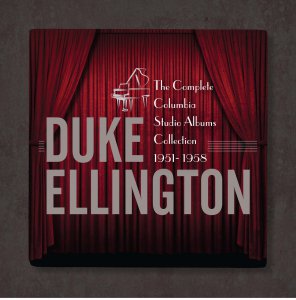
Duke continued to record for labels like Bethlehem, but reserved some of his most adventurous projects for prestigious Columbia. A Drum is a Woman (1956) was an allegorical song cycle with narration and orchestral passages, and Such Sweet Thunder (1957) found Ellington and Strayhorn creating instrumental portraits of Shakespearean characters! Ellington Indigos (1958) included both his orchestra’s own favorites with those by composers such as Richard Rodgers and Cole Porter. The same year’s At the Bal Masque saw Ellington tackling an eclectic line-up of songs from “The Donkey Serenade” to “Who’s Afraid of the Big Bad Wolf,” and Black, Brown And Beige teamed Duke with a vocalist very different than Clooney: Mahalia Jackson. The Cosmic Scene (1959), credited to Duke Ellington’s Spacemen, looked to the past for cosmic inspiration, with renditions of “Body and Soul,” “St. Louis Blues” and “Midnight Sun” among its tracks. Ellington’s relationship with Columbia continued into the 1960s; perhaps those albums will be the subject of another such collection!
All of these sets arrive in stores on October 30 from Legacy Recordings, and can be pre-ordered below! You can also visit PopMarket.com for a full assortment of Complete Albums Collection boxes, Daily Deals and much more.
Louis Armstrong, The Complete OKeh, Columbia and RCA Victor Recordings 1925-1933 (OKeh/Columbia/RCA/Legacy 8869794565 2, 2012)
- Louis Armstrong & The Hot Fives – Volume 1 (1925-1926)
- Louis Armstrong: The Hot Fives & Sevens – Volume 2 (1926-1927)
- Louis Armstrong: The Hot Fives & Sevens – Volume 3 (1927-1928)
- Louis Armstrong & Earl Hines (1927-1928)
- Louis in New York (1929)
- St. Louis Blues (1929-1930)
- You’re Driving Me Crazy (1930-1931)
- Stardust (1931-1932)
- Swing, You Cats (1932-1933)
- Laughin’ Louie (1933, 1932, 1930)
Charlie Christian, The Genius of the Electric Guitar (Columbia/ Legacy 88697 93035 2, 2012)
- The Master Takes: Benny Goodman Sextet – 1939 / with The Alternate Takes
- The Master Takes: Benny Goodman Sextet – 1940 / with The Alternate Takes
- The Master Takes: Benny Goodman Sextet – 1940-41 / with The Alternate Takes
- The Master Takes: the Metronome All Star Nine – 1940, Benny Goodman And His Orchestra – 1939-1941, The Sextet Breakdowns & False Starts, The Sextet Rehearsal Sequences, March 13, 1941 Jam Session
Duke Ellington, The Complete Columbia Studio Albums Collection 1951-1958 (Columbia/ Legacy 88697 93888 2)
- Masterpieces By Ellington (1951)
- Ellington Uptown (1952)
- Blue Rose – Rosemary Clooney and Duke Ellington and His Orchestra (1956)
- A Drum Is A Woman (1956)
- Such Sweet Thunder (1957)
- Ellington Indigos (1957)
- Black, Brown And Beige feat. Mahalia Jackson (1958)
- Duke Ellington at the Bal Masque (1958)
- Duke Ellington’s Spacemen: The Cosmic Scene (1958)
Bessie Smith, The Complete Columbia Recordings (Columbia/ Legacy 88725 40310 2, 2012)
- The Complete Recordings Vol. 1 (1923-1924) (2 CDs)
- The Complete Recordings Vol. 2 (1924-1925) (2 CDs)
- The Complete Recordings Vol. 3 (1925-1928) (2 CDs)
- The Complete Recordings Vol. 4 (1928-1931) (2 CDs)
- The Complete Recordings Vol. 5 (1931, 1933, unissued takes, St. Louis Blues soundtrack, Ruby Smith Dialogue/An Interview with Chris Albertson)( 2 CDs)

You Might Also Like


2 thoughts on “Take the “A” Train to Complete Boxes From Ellington, Armstrong, Christian and Smith”
Leave a Comment


At least in the case of the Bessie Smith reissues, the buyer should beware. Columbia Legacy is simply taking the horrible-sounding sonic transfers from the late 80s/early 90s box sets they issued, and repackaging them. They were truly awful, dead-sounding transfers in which the engineers subscribed to the theory that any traces of surface noise from a 78 must be eliminated because the listeners demanded it. The result is no high end, an ugly, unnatural sounding narrow little spectrum of sound that distorts the majesty of Bessie’s voice, and her musical accompaniment. I can’t stress enough: avoid these like the plague. Chris Albertson’s original Columbia vinyl reissues from the late 60s and early 70s are vastly superior sonically. So, too, are the CD reissues on the U.K. label Frog. The sonic transfers were done by the late, great John R. T. Davies. Don’t say you weren’t warned….
I would tend to agree. Although the publicity says “all remastered by Mark Wilder”, what does that mean?
I have a hard time believing that the two sets based on 78’s (Armstrong and Bessie) went to the effort to return to original 78’s or plates. I also have a hard time believing that meticulous work was done on material from the LP era (Ellington).
I recognize that it is possible that some parts of some these sets sound better than circulating CDs, but it is just as likely that they sound the same or even worse.
I wish samples could be provided. I have been burned too often buying “remasters” that are not improvements.
I have not minded buying sets that are extremely budget valued, like the French sets of Billie, Louis, Bird and Ella last year ($2-$3 per disc! At that price they can be copies for the automobile!), but please give us some evidence.
The Duke set should have been his complete post 1947 Columbia recordings, not just this portion