
Look! Up in the sky! It’s the return of the Friday Feature! When a mad scientist threatens Metropolis, it’s Superman to the rescue…right? What if Superman wasn’t there? What if the Man of Steel was otherwise occupied, being honored for his heroic deeds by a group of local kids at the very moment City Hall was being blown up? Faced with his inability to save the day, would the Last Son of Krypton finally be pushed over the edge? That’s not a story you’ll find in any DC Comic, however, now
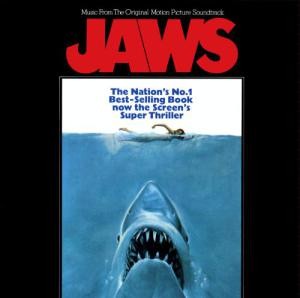
It wouldn't be summer without cold beers, meat on your barbecue, kids splashing in swimming pools...or a 25-foot-long, three-ton great white shark intent on devouring your local bustling summer community. Okay, that last one's a stretch in literal practice, but the 1975 blockbuster film JAWS, based on Peter Benchley's best-selling novel, is a summertime staple, in fact kicking off the notion of huge crowd-pleasing flicks grabbing for audience members as the temperature heats up. The movie was

When The Second Disc started two years ago, it didn't take long to realize that catalogue soundtrack coverage was going to be well met on the site. Joe and I love the power and beauty of film music, and admire the work of those awesome individuals who are preserving it on disc for future generations. Today marks the 30th anniversary of my all-time favorite film, E.T. the Extra-Terrestrial, a film with a powerful soundtrack if ever there was one. Recounting the tale of the music of E.T. is one

Earlier this week, Walt Disney World welcomed back an old friend: Florida's Orange Bird, absent from the World since 1987! We thought this would be a great time to bring back the Friday Feature, which is usually dedicated to film soundtracks but occasionally takes a Disney diversion! Today, we're turning the spotlight on the little Orange Bird's one moment of recorded glory, on which he was joined by a future Oscar winner! Move over, Jose, Fritz and Pierre. There's a new bird in
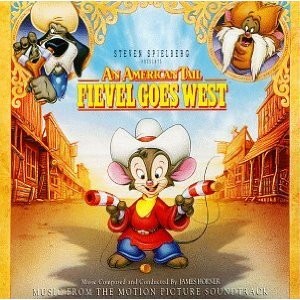
Let's get the opinions out of the way: An American Tail is not a great movie. I'm not even sure it's a good movie; I probably wouldn't even be writing this had it not been an early childhood favorite. But while the film doesn't quite pan out as a cohesive piece of work, there are some great parts - an interesting approach to plot and animation, and certainly a brilliant batch of soundtrack writing - that make the film worth writing about. The thing you have to remember about An American Tail,

This month, it's finally time to play the music and light the lights, with the release of The Muppets, a brand new film featuring Kermit The Frog, Miss Piggy, Fozzie Bear, The Great Gonzo and just about all of Jim Henson's furry, felt-covered creations in an all-new story co-written by fabulous funnyman and human co-star Jason Segel (star of TV's How I Met Your Mother and co-writer and star of Forgetting Sarah Marshall). The film, which sees the Muppet gang reunite after years out of the

Happy Halloween! To celebrate this spookiest of holidays, we're bringing you a special holiday reprise from The Second Disc Archives in which we revisit the immortal, undead "Son of Dracula," starring Harry Nilsson and Ringo Starr! October 2010 will bring a major reissue campaign devoted to the Apple Records discography, seeing most of that storied label’s output arrive in editions remastered by the same team behind the Beatles’ catalogue overhaul last year. But one Apple-related LP is among

Our enjoyment of music takes many shapes and sizes, from the most basic of digital files to the vast quantities of reissues and box sets we all enjoy around The Second Disc. Part of the nervous excitement in being a collector is really never knowing what your latest musical obsession will look or sound like - and that's, I think, what keeps us coming back. Now, replace "music" with "an alien virus from another planet" and "nervous excitement" with "crippling terror" and you have the subject of
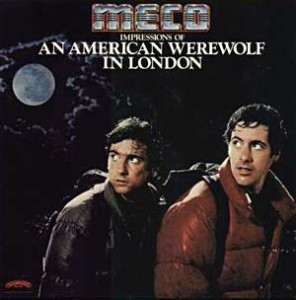
In 1941, the werewolf mythology gained an iconic set of lines in the Universal horror classic The Wolf Man: "Even a man who is pure at heart/and says his prayers by night/May become a wolf when the wolfsbane blooms/and the autumn moon is bright." Forty years later, from the same studio, a less delicate line was added to the lycanthrope canon: "I will not be threatened by a walking meat loaf!" Such is the tone of An American Werewolf in London, one of the best horror-comedies of the past few

Have you ever dreamed of a place far away from it all? Where the air you breathe is soft and clean, and children play in fields of green? And the sound of guns doesn't pound in your ears anymore? Hal David's lyrics expressed a sentiment shared by many of the optimistic generation who hadn't yet felt their ideals vanquished by the reality of Vietnam and growing dissension under the White House of President Richard M. Nixon. David's words were captivatingly sung by folk artist Shawn Phillips,

That crunching, crashing sound you hear is another Transformers movie rolling out into theaters. The series' third installment, Dark of the Moon, features Autobots and Decepticons yet again pummeling each other into scrap metal with the fate of the Earth at stake. While it remains to be seen - at least by this author - if the new film is any worse than the abhorrent Revenge of the Fallen from 2009 (which featured an enemy with a crotch made of wrecking balls, hereafter referred to as

[youtube=http://www.youtube.com/watch?v=0ZOcoxjeUYo] This Sunday, June 12, marks the 30th anniversary of one of the best films of all time: Raiders of the Lost Ark. For three decades, Harrison Ford's iconic, fedora-clad hero, Indiana Jones, has become a touchstone of film heroism for the whole world. The brilliant visionaries who created Jones, producer/directors George Lucas and Steven Spielberg, reinvented blockbuster cinema on their own time; together, they created what may be the perfect

Quick! What's the last big hit you can name from a soundtrack? It's not easy, is it? The world of music and movies used to be so intertwined, with chart-topping hits spinning off of blockbuster movies like nobody's business. 1984 was a great year for that, with Purple Rain, Footloose, Ghostbusters and even The Woman in Red yielding high-selling, award-winning singles. Today, though? The most recent soundtrack hit I can think of might be Kelly Clarkson's "Breakaway," and nobody remembers it came

Fate works in mysterious ways. Dionne Warwick was home one evening, half-asleep while the 1982 film Night Shift played on her television set. “I didn’t really pay attention to the names that were going up on the credits,” Warwick recounted, “but I knew that was Burt Bacharach’s melody. There was no way in the world it could be anybody else’s.” She was speaking of “That’s What Friends Are For,” an all-but-forgotten song written for the 1982 film Night Shift, Ron Howard’s major big screen

“Just one word…plastics.” With that one word, spoken to the disaffected Benjamin Braddock (Dustin Hoffman) by an associate of his father’s, the audience viewing 1967’s film The Graduate, could both laugh and sneer along with Benjamin. After all, “plastics” stood for all that was superficial and fake in society. Mike Nichols, directing only his second feature film after a successful Broadway career, was anything but subtle as he masterfully threaded the film’s themes throughout every aspect of

More than 30 years ago, Dave Cameron walked through the halls of Clairemont High School in San Diego. He had a colorful collection of friends: a middle-class, business-oriented guy, his sexually naive sister, her sophisticated best friend, the jock and nerd duo that lusted after the girls and a colorful surfer dude. What none of them knew at the time was that Dave Cameron wasn't really a high school student. He was 22, and had already graduated high school seven years prior, at the age of 15. In
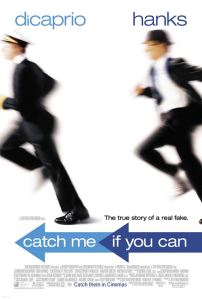
It's hard not to be skeptical over the fact that Catch Me If You Can, the amazing "true story of a real fake," is coming to Broadway. Modern musicals based on existing properties either hew too close to their original musical source material (if they were already rooted in song, like Footloose) or not close enough; consider Spider-Man: Turn Off the Dark, for instance. (Or don't!) The few songs this author's heard from the Catch Me musical score, sent on a promotional disc, are jaunty and fun

Remembering his great friend John Barry upon the composer's recent death, lyricist Don Black regaled the press with stories of the "blunt-spoken Yorkshireman" with his divine gift of music. Black relished the tales of Barry's epic battle with Barbra Streisand which led to the mercurial composer's departure from Streisand's The Prince of Tides and his succinct rebuke to producer Harry Saltzman on the producer's criticism of his theme song for Diamonds Are Forever: "What the f--k do you know about
Thank you, Cameron Crowe. You had me at "hello." You cost me plenty, but my record collection has long been grateful for the education! The integration of popular song and cinema has been around as long as the talking film itself, since the day Al Jolson prefaced his performance of "Toot, Toot, Tootsie (Goodbye)" with the epochal dialogue "Wait a minute, wait a minute, you ain't heard nothin' yet!" These lines from 1927's The Jazz Singer, the first feature-length "talkie" in which

Once in a while, a great comedy comes around that makes an incredible impact on film, thanks to its quick wits, original ideas and great performances. In the 1980s, there were several great films that deftly blended comedy with science fiction and action film tropes - 1984's Ghostbusters and 1985's Back to the Future - that remain generational touchstones and modern-day classics of popular cinema. When children of the '80s say, "They don't make 'em like they used to," it's not hard to imagine

"The dry riffle of the cards and the soft whirr of the roulette wheel, the sharp call of the croupiers and the feverish mutter of a crowded casino hide the thick voice at Bond's ear which says, 'I will count up to ten.'" So read the blurb on the jacket of the original printing of Ian Fleming's 1953 novel Casino Royale, which introduced Agent 007 to the world. Fleming's novel set the tone for those that followed, introducing the "Bond girl" (Vesper Lynd), the larger-than-life villain (Le Chiffre,
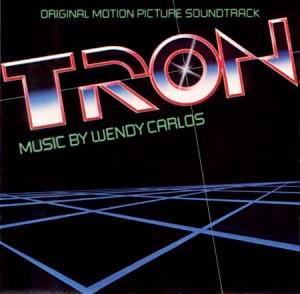
One of the most-talked about film scores on the market right now is the score to TRON: Legacy, composed by French electronic act Daft Punk. Everything about it is delightfully unconventional: it's a score for a Disney blockbuster - a sequel to a cult classic released nearly 30 years ago - composed by two killer musicians best known for making fresh music through technological, not organic means. But the hybrid electronic/orchestral score is a knockout, arguably a serious Oscar contender and one
We're just about to put the "Closed" sign on the door of The Second Disc HQ, but should any of you stumble upon The Second Disc on Christmas, I want this to be the first thing you see for two reasons. One, you're going to find a compendium below of all the Christmas articles Joe and myself have done this season. Let them fill you with Christmas cheer whenever you need some! And second, and most importantly, may you, the treasured reader of The Second Disc, have a Merry, Merry Christmas and a
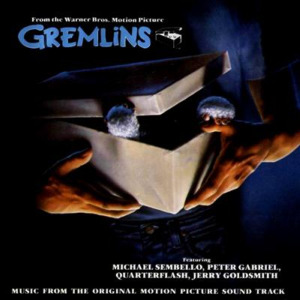
[youtube=http://www.youtube.com/watch?v=8kjHFSa7ghE] There were many scores that soundtrack fans were hoping for on CD in 2010. But few are sought after more than the score to Gremlins (1984), a wacky, synthesizer-based romp from composer Jerry Goldsmith. It would have been a fantastic grab from one of the major labels for the Christmas season, but it looks like it may be another long wait before the score is released. But with Christmas around the corner, why not bring up one of the most

This special holiday-themed Friday Feature originally appeared in December 2010, but we've rescued it from The Second Disc Archives to share it with you! It is dedicated to the memory of Leslie Nielsen, who could count Mr. Magoo as just one of many of his indelible film creations, as well as to the gone-but-not-forgotten Jim Backus, Morey Amsterdam, Jack Cassidy and Paul Frees. Before Rudolph, Frosty and Charlie Brown ruled the television airwaves each December, there was the nearsighted Mr.